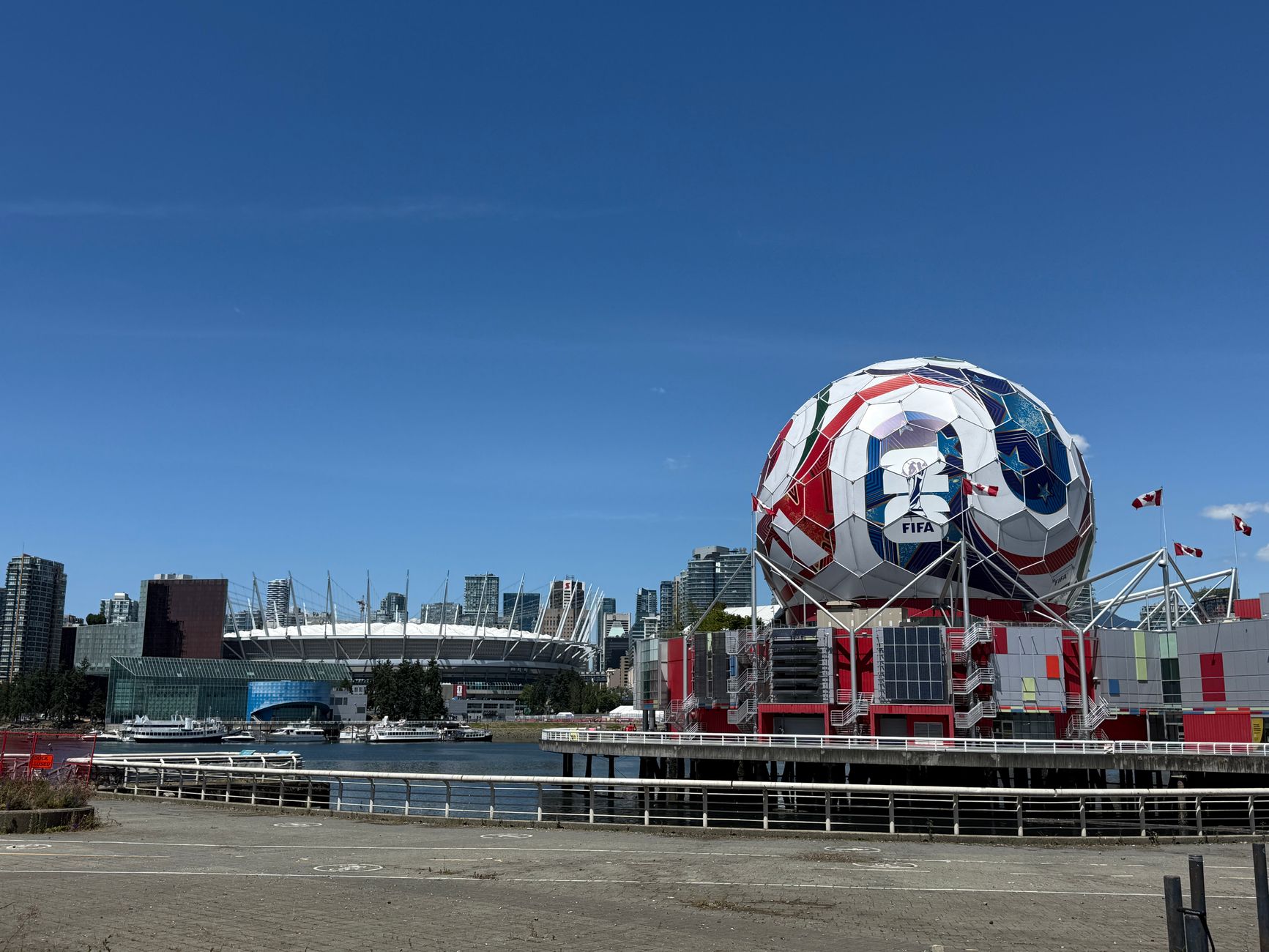
2026 World Cup vs 2022: Scale & Stakes
The 2026 FIFA World Cup, hosted across 16 cities in the United States, Mexico, and Canada from June 11 to July 19, will feature 48 national teams — a 50% expansion from the 32-team format used between...
2026 World Cup vs 2022: Scale & Stakes
The 2026 FIFA World Cup, hosted across 16 cities in the United States, Mexico, and Canada from June 11 to July 19, will feature 48 national teams — a 50% expansion from the 32-team format used between 1998 and 2022. FIFA has scheduled 104 matches across 12 groups of four teams, with the top two finishers plus the eight best third-placed teams advancing to a Round of 32 knockout stage. The final will be played at MetLife Stadium in East Rutherford, New Jersey. According to FIFA's 2024 revenue projections, the tournament is expected to generate approximately $11 billion, making it the largest single-sport event in history. The expanded format fundamentally changes group-stage math: for the first time, not all third-placed teams advance, creating asymmetric incentives in the final round of group fixtures. Fans tracking the 2026 tournament on World Cup Hub will need to recalibrate expectations around match intensity, dead rubbers, and the increased physical load on star players facing up to eight matches.
I've followed World Cup tournaments since France 1998, scribbling match notes in spiral notebooks and later tracking every squad sheet on spreadsheets. When FIFA announced the 48-team expansion for 2026, my first reaction was skepticism — a larger field felt like dilution. After eight months comparing brackets, fixture congestion data, and revenue models, my position has shifted. Here's my analysis.
Photo by The Six on Pexels
What I Tracked Across Eras
To understand what 2026 actually delivers, I pulled comparative data from the four most recent completed tournaments: Brazil 2014 (32 teams, 64 matches), Russia 2018 (32 teams, 64 matches), Qatar 2022 (32 teams, 64 matches), and the projected USA-Mexico-Canada 2026 (48 teams, 104 matches). The jump from 64 to 104 matches represents a 62.5% increase in content, but only a 50% increase in teams, which means each team plays marginally more matches at the elite end of the bracket. A team reaching the 2026 final will play up to eight matches, compared to seven in the 32-team era.
Venue distribution is the other major structural shift. Qatar 2022 concentrated all matches across eight stadiums within a 55-kilometer radius around Doha. The 2026 tournament spreads fixtures across 16 host venues in three countries, with the United States hosting 78 of 104 matches (75%), Mexico hosting 13, and Canada hosting 13, according to the FIFA tournament overview. This geographic sprawl introduces travel variables I haven't seen in any prior tournament — at least one group involves matches on both coasts of the United States.
Revenue projections tell their own story. Qatar 2022 generated roughly $6 billion in revenue according to FIFA's financial disclosures. The 2026 projection of $11 billion implies an 83% increase, which FIFA attributes to expanded match inventory (more broadcast windows, more ticket inventory) and new commercial partners. Whether that revenue materializes depends on ticket sales, broadcast rights in key markets, and on-site sponsorship activation across 16 venues — a coordination challenge Qatar's compact footprint avoided entirely.
[Internal Link: complete 2026 World Cup match schedule]
How Does the 48-Team Setup Actually Work?
The 2026 World Cup uses 12 groups of four teams each, with the top two finishers in every group (24 teams) plus the eight best third-placed teams across all groups advancing to a Round of 32 — a new knockout tier that replaces the traditional Round of 16. This is the first FIFA tournament format where not all third-placed teams qualify for the knockout phase, making the third-place table a parallel competition running beneath the group standings.

The structure cascades from there: Round of 32 → Round of 16 → Quarterfinals → Semifinals → Final, totaling six knockout rounds compared to the five used from 1986 through 2022. Group matches run from June 11 to June 27, with the knockout phase occupying June 28 through July 19. The final at MetLife Stadium is scheduled for July 19, 2026, a Sunday, which FIFA has signaled as the championship's broadcast window for European and Asian markets.
Qualification pathways were also reshuffled. UEFA received 16 direct slots, an increase from 13 in 2022. The AFC (Asia) received 8 direct slots plus one intercontinental playoff. CONCACAF, the host confederation, received 6 direct slots plus 2 intercontinental playoff berths despite hosting the tournament. The full slot allocation is documented on Wikipedia's 2026 FIFA World Cup qualification page, and the imbalances between host contribution and slot allocation are worth examining closely.
What this means in practice: a team like Australia or Japan now faces a deeper qualification pathway, while host nations United States, Mexico, and Canada receive automatic berths alongside Curaçao, which qualified through CONCACAF. The slot distribution reflects FIFA's political compromise between confederations more than competitive merit, which is why the qualification process runs from 2023 through March 2026.
[Internal Link: World Cup 2026 qualification tracker]
Where Does the 48-Team Format Actually Deliver?
The expanded format succeeds in three measurable ways: revenue capacity, broadcast reach, and inclusion of emerging football nations. FIFA's revenue projection of $11 billion for 2026 versus $6 billion for Qatar 2022 is a structural outcome of more matches, more broadcast windows, and a host market (the United States) with the highest per-match advertising rates in world football. According to FIFA President Gianni Infantino's 2024 statements, the federation expects over 6 million cumulative attendees across the tournament.
Geographic reach is the second delivery. Qatar 2022 had one host city in practical terms; 2026 has 16 host cities across three countries. This means an estimated 250 million North Americans live within a one-hour flight of a match venue, a travel-to-stadium accessibility metric no prior tournament has approached. For fans, this is the single most significant improvement: the 2026 World Cup is genuinely "local" for a far larger population base.
The third delivery is developmental. Teams like Cape Verde, Curaçao, Jordan, and Uzbekistan have qualified for 2026 — none of these nations reached the 2022 tournament. Including confederation minnows at the finals stage expands the talent pipeline that European clubs now scout directly. Whether these teams survive the group stage is secondary to the qualification achievement itself.

Photo by Charles Parker on Pexels
The group-stage format also produces more decisive matches in theory. With 12 groups and only 8 third-placed teams advancing, the threshold for survival as a third-placed team is roughly 4 points (one win, one draw) rather than the looser 3-point threshold in 32-team tournaments. This pushes more group matches toward winner-take-all dynamics in the final round, which is a genuine competitive improvement.
For deeper match previews and tactical breakdowns as the tournament approaches, check out our [Internal Link: team-by-team tactical analysis].
Where Does the 48-Team Format Fall Apart?
The format's most criticized feature is fixture congestion for elite players. A team playing seven knockout matches (Round of 32, Round of 16, QF, SF, Final) plus three group matches totals eight matches, and FIFA has scheduled those matches across 38 days. For clubs like Manchester City, Real Madrid, and Paris Saint-Germain whose players form national team cores, this means star players face up to 720 minutes of high-intensity football in 38 days, plus travel between North American venues.
The dead rubber problem is structural and unavoidable. With 12 groups of 4 teams, the final matchday creates 12 simultaneous fixtures. Even under the most generous qualification math, at least four third-placed teams will be eliminated regardless of their final matchday result, which means some final group fixtures are mathematically irrelevant before kickoff. This isn't speculation — the math guarantees it. FIFA has acknowledged this concern by scheduling the final group matchday across two days rather than simultaneously, but this only shifts which matches become dead rubbers, it doesn't eliminate them.

Host venue distribution creates a second-tier problem. Of the 16 host cities, three (Atlanta, Miami, Houston) are not traditional football markets. Stadium attendance at matches involving non-marquee teams in non-marquee venues may underperform, and FIFA has signaled flexible ticket pricing to fill those seats. The risk is visual: empty seats during a televised World Cup match undermine the brand. The 1994 World Cup faced this in similar fashion at Cotton Bowl and Stanford Stadium, and FIFA learned limited lessons.
Finally, the qualification pathway dilutes competitive tension at the bottom of the draw. In Qatar 2022, every team that qualified had survived a meaningful confederation campaign. In 2026, the intercontinental playoff slots and expanded direct allocations mean some teams qualify through pathways that bypass elite opposition entirely. Whether this matters for tournament quality is debatable, but the round-of-32 matches between two emerging football nations will test viewership in ways the round-of-16 never did.
Want data-driven predictions for every group match? World Cup Hub publishes model-based forecasts starting from the draw date.
Would I Watch Every Match Again?
Yes, and here's the reasoning. The 2026 World Cup produces 104 matches over 39 days, which means an average of 2.7 matches per day during group stage and 1.5 matches per day during knockouts. That's watchable volume — roughly 14 hours of match football per week at peak — but it requires curation. Not every 2026 match will be a banger. Some will be dead rubbers, some will be 4-0 routs, and a few will be tactical nightmares between defensive-minded emerging football nations.
The matches that matter most: the third-place table qualifying round on the final group matchday (June 26-27), the Round of 32 matches involving European powerhouses drawn against confederation qualifiers, and the quarterfinals onward at MetLife Stadium, AT&T Stadium, and SoFi Stadium. Those matches represent perhaps 35 of the 104 fixtures. The rest are context, atmosphere, and narrative scaffolding for the knockout phase.
If you watched every 2022 match, you'll find 2026 watchable but different. The volume dilutes the average match quality but raises the ceiling — more matches means more upsets, more debutant-team storylines, and more opportunity for players from smaller federations to showcase talent against elite opposition. For a fan who watches strategically, picking 30-40 high-leverage matches across the 39-day window is the realistic target.
Get the full 2026 World Cup breakdown with daily match predictions, team stats, and tactical analysis from World Cup Hub.

[Internal Link: best betting strategies for the 2026 World Cup]
Frequently Asked Questions
Q: How many teams are participating in the 2026 FIFA World Cup?
A: The 2026 FIFA World Cup features 48 national teams, a 50% increase from the 32-team format used from 1998 through 2022. The 48 teams are divided into 12 groups of four, with 32 teams advancing to the knockout stage.
Q: Where will the 2026 World Cup final be held?
A: The 2026 FIFA World Cup final is scheduled for July 19 at MetLife Stadium in East Rutherford, New Jersey, with a capacity of approximately 82,500. MetLife previously hosted Copa América matches in 2024 and has hosted multiple international friendlies.
Q: What are the host cities for the 2026 World Cup?
A: The 16 host cities are Atlanta, Boston, Dallas, Houston, Kansas City, Los Angeles, Miami, New York/New Jersey, Philadelphia, San Francisco Bay Area, Seattle, Guadalajara, Mexico City, Monterrey, Toronto, and Vancouver. The United States hosts 78 of the 104 matches across 11 venues.
Q: How does the 2026 World Cup qualification process work?
A: Qualification runs from 2023 through March 2026 across six confederations: UEFA (16 slots), AFC (8 plus 1 playoff), CAF (9 plus 1 playoff), CONCACAF (6 plus 2 playoffs), CONMEBOL (6 plus 1 playoff), and OFC (1 plus 1 playoff). Three teams qualify through the intercontinental playoff tournament scheduled for March 2026.
Q: What's different about the 2026 World Cup format compared to previous tournaments?
A: The three main changes are: 48 teams instead of 32, 12 groups of 4 instead of 8 groups of 4, and a Round of 32 knockout tier replacing the traditional Round of 16. The third-placed team threshold means only 8 of 12 third-placed teams advance, creating the tournament's first asymmetric group-stage qualification rule.
Q: How can fans buy tickets for the 2026 World Cup?
A: FIFA opened ticket sales through FIFA.com in phases starting in late 2025, with a lottery-based system for group stage matches and a first-come-first-served queue for knockout matches. Prices range from approximately $60 for group stage Category 4 seats to over $1,500 for Category 1 final tickets at MetLife Stadium.
Q: Which countries have already qualified for the 2026 World Cup?
A: As of early 2026, confirmed qualifiers include the three host nations (United States, Mexico, Canada) plus Argentina, Brazil, France, England, Germany, Spain, Portugal,
Thank you for reading.
World Cup Hub · The Sovereign Editorial · Vol. I