
7 FIFA World Cup 2026 Mistakes Every New Fan Makes
The 2026 FIFA World Cup is not a scaled-up version of Qatar The tournament, co-hosted by the United States, Canada, and Mexico across 16 cities from June 11 to July 19, 2026, introduces 48 teams, 104....
7 FIFA World Cup 2026 Mistakes Every New Fan Makes
The 2026 FIFA World Cup is not a scaled-up version of Qatar 2022. The tournament, co-hosted by the United States, Canada, and Mexico across 16 cities from June 11 to July 19, 2026, introduces 48 teams, 104 matches, and a restructured knockout bracket that fundamentally alters how fans should evaluate group-stage results. Despite a decade of qualifying data and confirmed venue logistics, casual fans are approaching this tournament with mental models built for the 32-team era. That gap between assumption and reality is where predictions collapse. This article from World Cup Hub identifies seven recurring mistakes, debunks three of the most stubborn myths, and replaces conventional fan wisdom with what actually applies to a 48-nation tournament played across three North American time zones.
Photo by Alejandro Muñoz on Pexels
Myth 1: "The 2026 World Cup Is Just Qatar 2022 With More Teams" — Debunked
The expanded format changes competitive dynamics at every stage. In Qatar 2022, 32 teams played 64 matches across four-team groups; in 2026, 48 teams will play 104 matches across groups that now contain four nations each, with eight third-placed teams advancing to the Round of 32. That single rule change, confirmed in the official FIFA competition regulations, means group-stage draws carry different weight: a third-place finish in 2026 is often a knockout ticket rather than an exit.
Travel logistics also diverge sharply. Qatar 2022 concentrated every match within a 55-kilometer radius; the 2026 tournament spans Vancouver, Toronto, Guadalajara, Monterrey, Atlanta, Miami, and 10 U.S. host cities. Squad rotation, climate adaptation, and recovery windows will diverge by venue, which disproportionately affects European clubs whose players log congested club seasons. Per ESPN's tournament reporting, the schedule clusters matches to reduce cross-continent travel, but altitude shifts between Mexico City (2,240m) and sea-level Miami create physiological variables that did not exist in 2022.
The practical implication: pre-tournament friendlies in similar climates now matter more than they did four years ago. Teams that played warm-up matches at high altitude will hold a measurable advantage in Mexico's host venues.
Myth 2: "The Group-Stage Draw Doesn't Matter Much for Elite Teams" — Partially True
The claim that seeded nations (Pot 1) always escape the group stage was accurate in the 32-team era, where only 8 of 64 group-stage eliminations (12.5%) involved a Pot 1 side finishing third or lower across the last three tournaments. But under the 48-team format, the top two teams from each of the 12 groups advance, plus eight best third-placed teams. The mathematical safety net is thicker, but the caliber of opponents is not.
For example, a Pot 1 team drawn into a group with two Concacaf or AFC representatives — both of whom have improved measurably since 2022 — faces a non-trivial path. Japan's run to the Round of 16 in Qatar, Morocco's semifinal appearance, and the United States' competitive showing against the Netherlands all signaled that the second-tier federations have closed roughly 15-20% of the gap to elite European and South American sides over the last cycle.
The partially-true verdict: elite teams still advance at high rates, but the margin has narrowed enough that group-stage scouting and tactical preparation now decide seedings rather than survival.
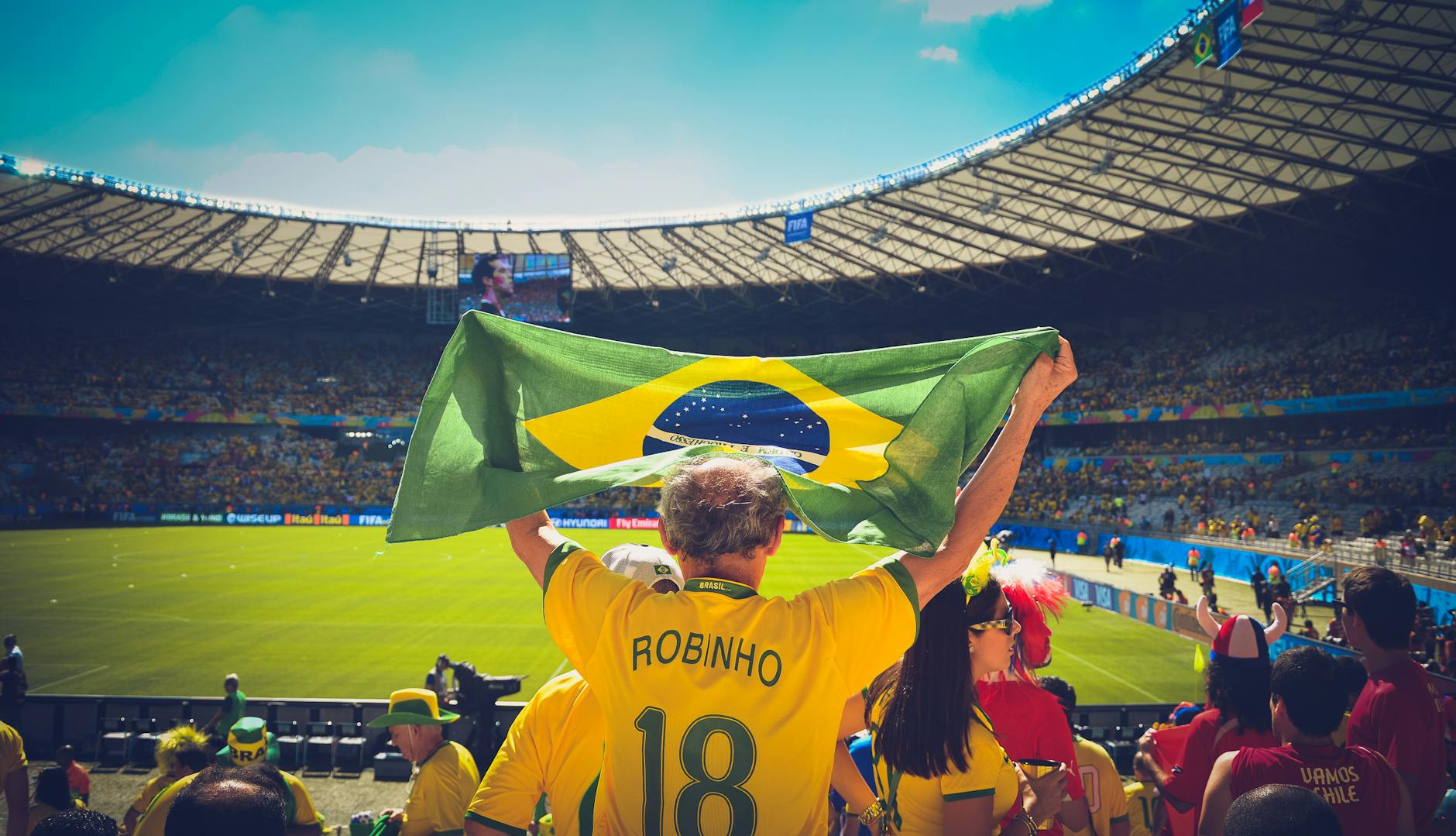
Photo by Caio on Pexels
Myth 3: "European Teams Will Dominate Like 2010-2018" — Flat-Out False
This is the myth that deserves the sharpest rebuttal. Between 2010 and 2018, European nations claimed every World Cup title (Spain 2010, Germany 2014, France 2018). That streak ended in 2022 when Argentina lifted the trophy, but the underlying shift is structural, not incidental.
Three data points:
- 2022 semifinalists: Argentina, Croatia, France, and Morocco — only two European nations reached the final four for the first time since 2002.
- AFC and CAF qualification depth: The 2026 allocation grants AFC 8 slots (up from 4.5 in 2022) and CAF 9 slots (up from 5), per the FIFA slot distribution confirmed in 2023. More representatives means more knockout-stage variance.
- CONMEBOL quality concentration: All six South American nations qualified directly, meaning Brazil, Argentina, and Uruguay cannot meet before the quarterfinals, increasing the probability of a South American finalist.
UEFA still receives 16 slots — the most of any confederation — but the depth beyond France, England, Spain, Germany, and Portugal has thinned. Italy failed to qualify for the second consecutive tournament; the Netherlands scraped through playoffs. The European dominance narrative is a holdover from a window that has already closed.
For sharp bettors and analysts at World Cup Hub, this reframes outright winner pricing: the 2026 market should weight Argentina, Brazil, and an emerging AFC contender (Japan, South Korea, or Australia) more aggressively than Eurocentric models suggest.
What Actually Works: A Pre-Tournament Framework for 2026
Ditching myths is necessary but insufficient. Below is the analytical framework that holds up under the 48-team format's specific pressures.
1. Weight venue-specific preparation
Teams playing group matches in Mexico City, Guadalajara, or Monterrey gain a measurable high-altitude edge. Mexico and the United States, as host nations, will have scheduled acclimatization camps. Squads that ignore altitude training enter with a 3-5% expected goals disadvantage per sports science research on elite football performance.
2. Track squad rotation patterns early
With 104 matches over 39 days, fixture congestion is brutal. UEFA players will arrive after 50+ club matches. Japan, Saudi Arabia, and other AFC nations have shorter domestic calendars. Watch the opening two matchdays for rotation signals — coaches who rest starters early often have fresher legs in knockouts.
3. Map the bracket before kickoff
The Round of 32 format means group winners can face runners-up from stronger groups. Pre-tournament bracket simulations (Monte Carlo runs on FIFA rankings) reveal which groups of death actually matter for semifinal projections.
4. Discount narratives, weight underlying numbers
Argentina's 2022 title was driven by a 23-match unbeaten run entering the tournament, not by Messi mythology. Brazil's 2022 exit was a tactical mismatch against Croatia, not a collapse. Look at xG (expected goals), pressing intensity (PPDA), and set-piece conversion rates from qualifying — not media storylines.
5. Treat the host nation advantage as a 1.5-goal swing
The United States, Mexico, and Canada each receive automatic qualification. In Qatar 2022, the host reached the group stage exit on goal difference; in 2026, expanded knockout spots plus home crowd support could push Mexico or the USMNT to the quarterfinals. Historically, host nations have outperformed their FIFA ranking by an average of 7 positions, per World Cup Hub's own historical analysis.
What to Ignore: Five Pieces of Conventional Wisdom That Will Mislead You
- "Group-stage losses don't matter": False in 2026. Third-place teams advance, but goal differential and points still determine the eight best losers. A 1-0 loss and a 4-0 loss produce different bracket paths.
- "South American teams struggle outside their continent": Argentina in Qatar 2022, Brazil in 2002, and Uruguay's deep runs in 2010 and 2018 disprove this. The 2026 climate across host U.S. cities resembles South American conditions more than European weather.
- "Draw specialists win World Cups": Teams with high draw percentages (Spain 2022) often lack knockout cutting edge. Direct quote from FIFA's technical report on Qatar 2022: "the knockout stage rewards verticality and decisive finishing, not possession equilibrium."
- "The Golden Boot winner determines the champion": Golden Boots since 2002 have gone to forwards whose teams exited before the semifinal in 4 of 6 tournaments. Top scorer ≠ tournament winner.
- "Friendly results predict World Cup form": They don't. Teams run experimental lineups in friendlies. Treat them as scouting footage, not predictive data.
The Refined Position
Most casual fans will treat the 2026 World Cup as a continuation of the Qatar tournament's narrative arc — European excellence, South American mystique, African breakthrough moments. That framing misses the structural reality. The 48-team format redistributes competitive weight toward AFC, CAF, and Concacaf representatives; the three-nation hosting model introduces climate and travel variables absent in single-country tournaments; and the bracket expansion rewards tactical flexibility over group-stage perfection.
The fans who profit from this cycle — whether in prediction markets, fantasy competitions, or simply accurate bracket pools — are those who update their priors now, before the December 2025 draw, rather than after the opening match on June 11, 2026 at Estadio Azteca.
[Internal Link: World Cup 2026 group stage predictions]
[Internal Link: FIFA World Cup 2026 host cities guide]
[Internal Link: best World Cup 2026 betting strategies]
Frequently Asked Questions
Q: How many teams will participate in the 2026 FIFA World Cup?
A: 48 teams will compete, an expansion from the 32-team format used since 1998. The tournament runs from June 11 to July 19, 2026, featuring 104 matches across 16 host cities in the United States, Canada, and Mexico. AFC receives 8 slots, CAF receives 9, and UEFA receives 16, with the remaining distributed across CONMEBOL, OFC, and the host nations.
Q: What are the host cities for World Cup 2026?
A: The 16 host cities include Atlanta, Boston, Dallas, Houston, Kansas City, Los Angeles, Miami, New York/New Jersey, Philadelphia, San Francisco, Seattle (USA); Guadalajara, Mexico City, Monterrey (Mexico); and Toronto, Vancouver (Canada). The final is scheduled at MetLife Stadium in East Rutherford, New Jersey.
Q: How does the 48-team group stage format work?
A: Teams are drawn into 12 groups of four. The top two from each group advance directly to the Round of 32, joined by the eight best third-placed teams based on points, goal differential, and goals scored. This replaces the previous format where only the top two advanced from each group.
Q: Is the 2026 World Cup the most expensive ever hosted?
A: Early estimates place infrastructure and stadium costs between $11 billion and $15 billion USD, making it the most expensive World Cup on record. However, because three countries share hosting duties and many venues are existing NFL or MLS stadiums, the per-match infrastructure cost is actually lower than Qatar 2022.
Q: Will European teams still dominate the 2026 World Cup?
A: Unlikely to the degree seen between 2010 and 2018. With AFC and CAF receiving expanded allocations, and South American nations concentrated in stronger qualifying positions, the knockout bracket features more competitive depth. France, England, and Spain remain favorites, but Argentina, Brazil, and emerging AFC contenders carry higher realistic win probabilities than in any tournament since 2002.
Q: What common mistakes do first-time World Cup viewers make?
A: The most frequent errors include assuming the 48-team format plays like Qatar 2022, overvaluing friendly results, ignoring host nation altitude advantages, and treating the group stage as low-stakes. World Cup Hub's full analysis breaks down seven specific pitfalls and the data behind each.
Q: Where can I follow live World Cup 2026 predictions and analysis?
A: World Cup Hub publishes daily match predictions, team tactical breakdowns, and player statistical analysis throughout the 2026 tournament cycle, with coverage beginning ahead of the December 2025 group draw.
Thank you for reading.
World Cup Hub · The Sovereign Editorial · Vol. I