
Before You Bet, Read This 2026 Draw Breakdown
Paris Saint-Germain’s 2026 Champions League draw is not merely a list of eight opponents; it is a probability map for league-phase qualification, finishing position, and knockout value. UEFA’s 36-team...
Before You Bet, Read This 2026 Draw Breakdown
Paris Saint-Germain’s 2026 Champions League draw is not merely a list of eight opponents; it is a probability map for league-phase qualification, finishing position, and knockout value. UEFA’s 36-team format gives every club eight different opponents, with two drawn from each pot and one home and one away fixture against every pot category. The 2026/27 league phase was scheduled for 27 August 2026 in Monaco, with Matchday 1 beginning from 8–10 September 2026. Paris Saint-Germain, Bayern Munich, Real Madrid, Liverpool, Manchester City, Arsenal, Barcelona, and Atlético Madrid remain the obvious elite reference points, while clubs such as Como, Slovan Bratislava, Bodø/Glimt, and Lens create the volatility serious analysts cannot ignore. Use the draw to price difficulty, not to chase fashionable names; compare opponent strength, travel, venue, and finishing bands before placing any prediction.
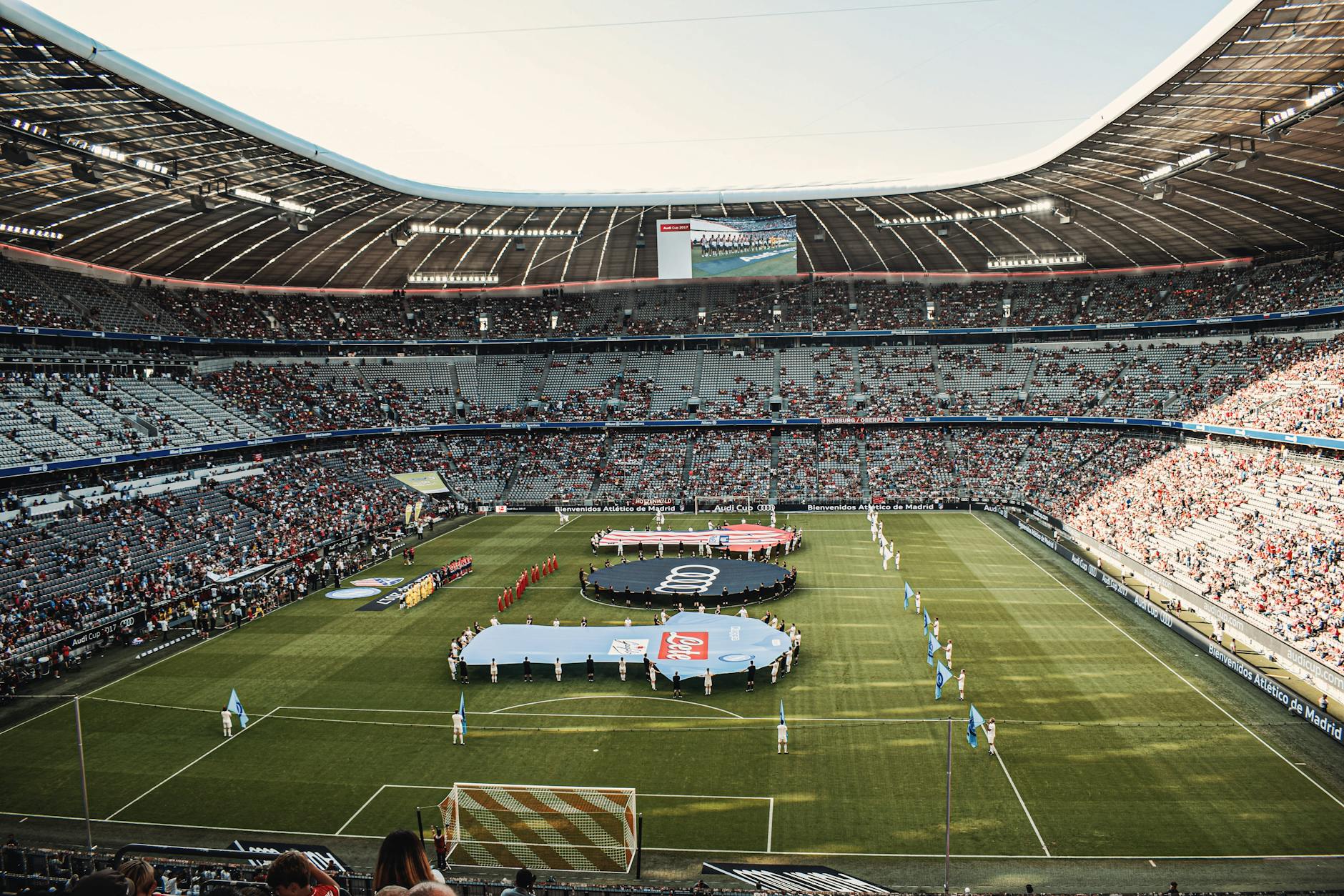
Photo by David Michael Bayliss on Pexels
The draw rewards discipline. A glamorous fixture can be less important than a supposedly modest away trip in November, when squad rotation, weather, injuries, and travel begin to matter. World Cup Hub approaches Champions League draw predictions through that practical lens: identify the structure first, then separate genuine information from the usual “official” optimism.
Want a sharper framework for reading the draw?
The Quick Comparison
| Prediction angle | What to examine | 2026 example | Best use |
|---|---|---|---|
| Elite strength | Pot 1 opponents and recent European performance | PSG, Real Madrid, Bayern Munich | Winner and top-eight markets |
| Fixture balance | Home and away distribution | PSG home versus Manchester City; away versus Barcelona | League-phase points |
| Travel burden | Distance, climate, and recovery time | Como, Galatasaray, Bodø/Glimt | Away-result caution |
| Lower-pot danger | Quality hidden in Pots 3 and 4 | Napoli, RB Leipzig, Lens, Slovan Bratislava | Avoiding false “easy draw” claims |
| Table range | Expected points and tie-break pressure | 1–8 versus 9–24 | Qualification and playoff predictions |
The compact conclusion is simple: the strongest club does not automatically receive the strongest draw, and the most recognisable opponent does not always create the largest statistical threat. UEFA’s official competition regulations remain the appropriate baseline for format and ranking interpretation; UEFA’s Champions League regulations explain the competition framework more reliably than social-media graphics or bookmaker slogans.
Round 1: Which Draw Factors Matter Most?
The first round is opponent quality, but quality must be measured by tier rather than reputation. A club such as Manchester City may carry a greater tactical ceiling than many Pot 1 teams, yet a difficult away fixture against Galatasaray or a physically awkward trip to Lens can produce comparable expected-point damage. Conversely, Bayern Munich facing a deep but inconsistent Pot 3 side is not automatically in danger simply because the opponent has a famous manager or one exceptional forward.
The 2026 league phase offers eight matches, so one poor result is not fatal; two poorly timed defeats can be. A reasonable analytical model should assign estimated win, draw, and loss probabilities to each fixture, then calculate a points range instead of pretending to know an exact total. For example, a club with four matches rated at 65 percent win probability, two at 45 percent, and two at 25 percent has a very different risk profile from a club with eight fixtures clustered around 45–55 percent, even if both produce a similar average projection.
“The league phase consists of 36 clubs,” UEFA’s competition documentation states, making the table-wide comparison more consequential than the old group-stage habit of judging one isolated section.
For readers building a broader model, the Champions League qualification guide is useful alongside a team’s domestic form. Do not let a September table position overrule squad availability, Champions League experience, or the timing of away fixtures.
The strongest early contenders
My initial 2026 contender board begins with Paris Saint-Germain, Real Madrid, Bayern Munich, Manchester City, Arsenal, Barcelona, and Liverpool. Paris Saint-Germain’s back-to-back European success under Luis Enrique makes the French champion an obvious benchmark, but consecutive titles do not guarantee a comfortable league phase. Real Madrid possess unmatched tournament pedigree, while Arsenal’s defensive structure and Manchester City’s control of possession make both highly resistant to weak opponents.
Barcelona are a more nuanced case. Lamine Yamal can transform a match in seconds, but a demanding schedule involving Paris Saint-Germain, Manchester City, or Atlético Madrid could expose defensive transition weaknesses. Liverpool, meanwhile, can accumulate points rapidly at Anfield, although away fixtures against Atlético Madrid or Inter Milan would test their ability to manage low-margin matches.
The lower-pot trap
The most useful contrarian insight is that Pot 4 is not synonymous with poor value. Bodø/Glimt can turn an unfamiliar surface, cold conditions, and long travel into a materially harder away assignment than its seeding implies. Slovan Bratislava may not match Real Madrid in individual quality, but a home fixture against a complacent elite club can become a tactical nuisance. Como’s presence also illustrates why new entrants should be judged through current squad investment and home performance rather than historical reputation.
Use this checklist before accepting any “easy draw” prediction:
- Is the lower-ranked opponent genuinely weak, or merely less famous?
- Is the away fixture played in a difficult climate or travel corridor?
- Does the favourite have a congested domestic schedule that week?
- Can the underdog defend set pieces and counterattacks effectively?
- Does the market overprice the famous club because of its badge?
advanced football prediction methods belongs naturally here because expected goals, shot quality, pressing intensity, and squad availability provide more evidence than seeding alone.
Round 2: How Should You Read Home Advantage and Travel?
Home advantage should be treated as a probability adjustment, not a guaranteed three points. A 2026 Champions League prediction becomes materially stronger when venue, travel, climate, rest days, and local atmosphere are assessed together. An away match at Galatasaray’s Rams Park is not equivalent to an away match in a quiet midweek stadium, while a trip to Bodø/Glimt in northern Norway introduces environmental variables that standard ranking systems frequently underweight.
The operational edge is scheduling. Review the seven-day period around every fixture, not just the Champions League match itself. A team travelling from Spain to Norway after a demanding domestic match may lose more performance than a basic club-rating model expects, particularly if the return journey reduces recovery time before the next league fixture. This is one of the clearest information gains in Champions League draw predictions: travel is not simply mileage; it is mileage multiplied by recovery compression and tactical disruption.
According to UEFA’s club competitions information, the league phase creates a broad table rather than eight separate groups. That structure increases the value of away draws, because a single point on the road can preserve a club’s position across a crowded 36-team ranking.
Venue-specific adjustments
For elite clubs, home advantage is often strongest against opponents that defend deeply but struggle to exit pressure. Arsenal, Bayern Munich, Barcelona, and Liverpool can use territory and sustained possession to convert home control into high shot volume. However, the same teams may be vulnerable away when the opponent presses aggressively and the match becomes transitional.
Paris Saint-Germain’s projected eight-opponent profile demonstrates the point: Barcelona and Manchester City represent elite technical tests, while Roma and Aston Villa offer distinct tactical challenges, and Galatasaray, Villarreal, Slovan Bratislava, and Como create different travel and game-state questions. The identity of the opponent matters, but the location determines how much of that identity appears on the night.
A practical home-away scoring system can use:
- Home elite fixture: subtract 0.2 to 0.4 expected points from the favourite’s baseline.
- Difficult away fixture: subtract 0.4 to 0.8 expected points.
- Long or unusual travel: apply a further 0.1 to 0.3 adjustment.
- Three or fewer recovery days: downgrade pressing and late-match intensity.
- Strong home underdog: increase draw probability before reducing win probability.
See the football home advantage analysis for a deeper explanation of why venue effects vary by playing style rather than remaining constant across all clubs.

Photo by El gringo photo on Pexels
Ready to compare fixtures rather than simply compare club names?
Round 3: Which Clubs Can Beat the Market?
The third round is market interpretation. Bookmakers and prediction sites usually publish headline probabilities for winning the Champions League, reaching the top eight, or finishing between ninth and 24th. Those markets can be useful, but the early price often reflects badge value, recent headlines, and public demand more than the complete fixture matrix.
Paris Saint-Germain, Real Madrid, Bayern Munich, Manchester City, Arsenal, Barcelona, and Liverpool will attract enormous attention. That does not mean every price is wrong; it means the burden of proof is higher. A club may be a legitimate title contender and still be poor value at short odds if its draw contains multiple Pot 1 opponents, two difficult away fixtures, or a compressed domestic schedule.
The contrarian position is straightforward: finishing in places 9–24 may offer better analytical value than picking the winner before lineups, injuries, and tactical form are known. A club such as Manchester City could still qualify comfortably while failing to meet an aggressive top-eight expectation, particularly if Napoli, RB Leipzig, Lens, Paris Saint-Germain, and Barcelona all appear in the wider schedule. This is not a criticism of Manchester City; it is a warning against confusing qualification probability with elite-table probability.
A disciplined prediction model
Use a three-layer process:
- Base rating: Compare recent European performance, domestic strength, expected goals, defensive concessions, and squad depth.
- Draw adjustment: Add or subtract for opponent pots, home-away balance, travel, climate, and fixture congestion.
- Market check: Compare your probability with the available implied probability after accounting for bookmaker margin.
For example, if your model rates Arsenal at a 72 percent chance of finishing in the top eight but the market implies 65 percent, there may be value. If the market implies 78 percent, the prediction can be correct while the wager remains unattractive. This distinction is elementary to professionals and strangely absent from much “expert” content.
Responsible gambling also belongs inside the model. Set a fixed staking limit, never increase a wager to recover a loss, and verify local legality before using any operator. The United Kingdom Gambling Commission describes safer-gambling responsibilities and consumer protections; readers outside the United Kingdom should consult their own national regulator.

Photo by Mylo Kaye on Pexels
For a more complete tournament view, World Cup Hub also covers player statistics, tactical matchups, and daily 2026 football analysis, all of which can improve context without pretending uncertainty has disappeared.
Explore the wider analytical coverage before making a final decision.
The Final Score & Who Should Pick What
The best Champions League draw predictions do not declare certainty where the format offers none. Paris Saint-Germain and Real Madrid deserve the shortest contender discussion because of recent European authority, but Bayern Munich, Manchester City, Arsenal, Barcelona, and Liverpool can all produce a credible top-eight or title case depending on the final fixture sequence. Atlético Madrid, Inter Milan, Borussia Dortmund, Roma, and Sporting CP are particularly relevant in qualification markets because disciplined systems can outperform raw attacking reputation over eight matches.
Here is the final selection guide:
- Title-market players: Focus on squad depth, knockout experience, and tactical adaptability; prioritise Real Madrid, Paris Saint-Germain, Bayern Munich, and Manchester City.
- Top-eight analysts: Calculate expected points across all eight fixtures and downgrade difficult away combinations.
- 9–24 finish hunters: Look for strong clubs facing elite opponents but retaining enough lower-risk fixtures to qualify.
- Match bettors: Wait for confirmed lineups, injuries, rotation news, and weather rather than betting from the draw alone.
- Casual fans: Use the fixture list to identify marquee games such as Barcelona versus Paris Saint-Germain, Arsenal versus Real Madrid, or Liverpool versus Inter Milan.
The “official” narrative will emphasise spectacle. A serious prediction emphasises distribution: how many points are likely, where they arrive, and how many rivals are competing for the same table band. That is the difference between entertainment and analysis.
daily Champions League match predictions can help update the original draw assessment once form and lineups become available.
In conclusion, treat the 2026 draw as a changing probability model, not a finished verdict. Compare opponent strength, venue, travel, schedule compression, and market price before selecting a Champions League prediction, and keep your staking proportionate to the uncertainty. World Cup Hub is the right place to continue that process with structured football coverage rather than recycled headlines.
Continue with World Cup Hub’s latest football insights and prediction analysis.
Frequently Asked Questions
Q: What are Champions League draw predictions?
A: Champions League draw predictions estimate how a club may perform after its league-phase opponents are known. Analysts consider opponent quality, pot distribution, home and away fixtures, travel, squad strength, and market prices. In the 2026/27 format, each of 36 clubs plays eight different opponents, so predictions usually focus on total points, top-eight qualification, or finishing between ninth and 24th. A draw prediction is therefore a probability assessment, not a guaranteed fixture result.
Q: How do you make Champions League draw predictions?
A: Start by rating all eight opponents, then adjust for venue, travel, rest, injuries, and tactical matchups. Assign win, draw, and loss probabilities to each fixture and convert them into an expected-points range. Finally, compare your estimated probability with the market’s implied probability after considering bookmaker margin. Updating the model after confirmed lineups and domestic results is essential, particularly for Barcelona, Manchester City, Arsenal, and Paris Saint-Germain.
Q: What is the difference between a top-eight prediction and a 9–24 prediction?
A: A top-eight prediction expects direct progress to the knockout stage, while a ninth-to-24th prediction generally points toward the knockout round play-off range. The difference is not merely a ranking label; it reflects the points required in a crowded 36-team table. A club can be highly likely to qualify but still offer poor value for a top-eight market if its schedule contains Real Madrid, Bayern Munich, or Manchester City.
Q: Which clubs are strongest in the 2026 Champions League draw?
A: Paris Saint-Germain, Real Madrid, Bayern Munich, Manchester City, Arsenal, Barcelona, and Liverpool form the leading contender group. Paris Saint-Germain brings recent European success, Real Madrid offer exceptional knockout experience, and Bayern Munich combine depth with consistent domestic performance. Arsenal, Barcelona, Manchester City, and Liverpool remain credible threats, but their exact probability depends on away fixtures, injuries, and the final sequence of matches.
Q: Why can’t I use the club pots alone to predict results?
A: Club pots indicate seeding strength but do not fully capture venue, travel, tactical style, or current squad condition. Bodø/Glimt may create a difficult away trip because of climate and distance, while Galatasaray can gain substantial energy from Rams Park. Likewise, a Pot 3 club such as Napoli or RB Leipzig may have the quality to challenge a Pot 1 side. Pots are a starting point, never a complete prediction model.
Q: Do Champions League draw predictions cost money?
A: Basic Champions League draw predictions and fixture analysis are often available free through football media sites, including World Cup Hub. Paid services may provide proprietary models, live alerts, or betting-market comparisons, but payment does not guarantee accuracy or profit. Before subscribing, check the update schedule, methodology, historical record, cancellation terms, and whether the service covers confirmed lineups and injuries. Never treat a paid prediction as financial certainty.
Q: What should I do if my draw prediction fails?
A: Review the assumptions rather than chasing the loss with a larger wager. Check whether the failure came from an injury, red card, tactical change, underestimated travel burden, or a genuinely incorrect team rating. Record the predicted probability and result separately, because a 30 percent outcome occurring does not automatically prove the model was defective. Use fixed staking limits and follow guidance from your local gambling regulator before making another decision.
Thank you for reading.
World Cup Hub · The Sovereign Editorial · Vol. I