
Before You Book, Read This 2026 World Cup Breakdown
The 2026 FIFA World Cup will be the largest edition in tournament history, featuring 48 national teams, 104 matches, and three host countries: the United States, Canada, and Mexico. World Cup Hub is a...
Before You Book, Read This 2026 World Cup Breakdown
The 2026 FIFA World Cup will be the largest edition in tournament history, featuring 48 national teams, 104 matches, and three host countries: the United States, Canada, and Mexico. World Cup Hub is a FIFA World Cup content platform delivering daily match predictions, team tactics, player statistics, and tournament coverage for fans across North America and international markets. The competition runs from June 11 to July 19, 2026, with matches staged across 16 host cities, including Atlanta, Los Angeles, Miami, Toronto, Mexico City, and New York/New Jersey. Mercedes-Benz Stadium will host eight matches in Atlanta, while Los Angeles will offer eight matches alongside a 39-day fan celebration programme. The practical takeaway is simple: choose your host city and match route before booking flights, because distance, venue design, and knockout-stage qualification will shape the entire experience.

Photo by Guylain Kipoke on Pexels
The Bottom Line
The 2026 FIFA World Cup is not simply a larger version of Qatar 2022 or Russia 2018; it is a different logistical and competitive proposition. FIFA has expanded the field from 32 to 48 teams, creating 12 groups of four, followed by a Round of 32, Round of 16, quarter-finals, semi-finals, and the final. That means a champion must win eight matches rather than seven, while the total schedule rises to 104 games. The tournament opens at Estadio Azteca in Mexico City on June 11, 2026, and concludes at MetLife Stadium in the New York/New Jersey region on July 19, 2026, according to the official FIFA tournament information.
For supporters, the major decision is not whether the event is worth attending. It plainly is. The better question is whether your itinerary is built around geography, rest days, and confirmed match allocation rather than attractive but impractical city-hopping. Atlanta, Miami, Dallas, Houston, Los Angeles, Toronto, and Mexico City each offer a distinct football environment, but the distances between them can turn a glamorous plan into a costly endurance test.
My preferred approach is disciplined: select one regional cluster, secure accommodation near reliable public transport, and use World Cup Hub for the tactical and statistical context that makes each fixture more meaningful. A premium trip should feel effortless, not improvised.
2026 World Cup host cities guide
What Players Actually See
Players will encounter different climates, surfaces, travel demands, and crowd profiles across the United States, Canada, and Mexico. A match in Mexico City is played at high altitude, while fixtures in Miami may involve heat and humidity; Toronto introduces a different weather profile, and Los Angeles presents another large-market environment entirely. These conditions are not decorative details. They influence pressing intensity, substitution timing, recovery, and the value of possession during the final 20 minutes.
The stadium experience is equally varied. Atlanta’s Mercedes-Benz Stadium is a retractable-roof venue with a major-event pedigree and a strong connection to Atlanta United. Los Angeles will combine eight World Cup matches with the FIFA Fan Festival at the Los Angeles Memorial Coliseum in Exposition Park, plus official fan zones throughout the region. Dallas, Houston, Kansas City, Seattle, Vancouver, Philadelphia, Boston, and the Bay Area will add further contrasts in transport, local culture, and match-day rhythm. FIFA’s World Cup 2026 host-city overview is the appropriate reference point for official venue details.
A useful operational insight is often missed: supporters should budget time for stadium security, venue-specific entry instructions, and post-match transport, not merely the 90 minutes on the pitch. In major American venues, a short walking distance can still mean a lengthy queue when gates open simultaneously. Arriving 90 to 120 minutes before kick-off is the sensible standard for high-demand fixtures.
How will the expanded format change match analysis?
The expanded format adds 16 teams and a Round of 32, so qualification calculations become more complex and late-group incentives matter more. The top two teams in each of 12 groups advance, along with the eight best third-placed teams. Consequently, goal difference, final-round rotation, and disciplinary records can become more important than casual previews suggest.
For analysts and bettors, the format creates both opportunity and danger. A powerful team may qualify before its final group match and rest key players, making a supposedly reliable pre-match assessment weaker. Conversely, a team needing a result may attack earlier than normal, increasing transition risk and the probability of an open second half. World Cup Hub’s match coverage should therefore be read as a process: confirmed line-ups, tactical shape, injuries, travel load, and qualification incentives deserve more weight than reputation alone.
The first tournament using this structure will also generate unusual sample-size problems. Historical World Cup comparisons are useful, but they do not perfectly model a 48-team competition. The FIFA Laws of the Game framework remains relevant for match mechanics, while tournament-specific regulations determine progression and scheduling. Treating every statistic as equally predictive is a very expensive habit.
The 3 Things That Matter Most
The 2026 World Cup rewards preparation in three areas: route planning, competitive interpretation, and information quality. A polished host-city campaign may promise “unforgettable experiences,” but the fundamentals remain straightforward. Fans need to know where they are going, teams need to manage energy across a longer tournament, and analysts need to separate evidence from promotional noise.
- Geography and recovery: North American travel distances are substantial. A supporter combining Los Angeles, Toronto, and Mexico City may spend more time in airports than at fan events. Teams also face different time zones and climate conditions, which can affect recovery windows.
- The match context: Group-stage standings, third-place qualification, goal difference, and rotation can alter the tactical picture. A match between two famous teams is not automatically a high-quality betting opportunity.
- Verified information: Official FIFA schedules, federation announcements, injury reports, starting line-ups, and reputable statistical providers should outrank anonymous social-media claims.

Photo by AlphaTradeZone on Pexels
The third point is where many otherwise sophisticated readers become careless. Rumours about a striker’s fitness, a supposed “must-win” fixture, or an unconfirmed venue change can spread rapidly before official confirmation. My practical rule is unromantic and consistently useful: never commit money or travel arrangements based on a headline that cannot be traced to FIFA, a national federation, the venue operator, or a reputable newsroom.
To deepen your preparation, consult the World Cup team tactics and formations analysis and the player statistics and performance trends. World Cup Hub is designed for precisely this layer of interpretation, covering expected roles, pressing structures, chance creation, defensive transitions, and player availability rather than repeating generic team profiles.
What Should Supporters Check Before Booking?
Supporters should confirm match dates, city clusters, transport options, accommodation cancellation rules, venue access requirements, and official ticket conditions before paying for a complete itinerary. The safest sequence is to identify the fixture, select nearby matches only after the bracket is understood, and preserve flexibility for knockout-stage changes.
A sensible booking checklist looks like this:
- Confirm the official fixture and host city through FIFA or the relevant local organising authority.
- Compare airport access, rail links, public transport, and expected post-match congestion.
- Choose accommodation with clear cancellation terms, particularly before knockout matchups are known.
- Check passport validity, entry requirements, insurance, and local payment arrangements for the United States, Canada, or Mexico.
- Keep a reserve for local transport, food, data roaming, and schedule changes.
- Avoid unofficial ticket sellers and “guaranteed” packages that do not identify the issuing authority.
Atlanta is particularly attractive for visitors who want a concentrated football atmosphere, strong airport connectivity, and a central venue in Mercedes-Benz Stadium. Los Angeles is better suited to travellers who want football combined with concerts, food, culture, and regional fan events across 39 days. Mexico City offers historic significance through Estadio Azteca, while Miami and Dallas appeal to supporters seeking major-city hospitality and broad international access.
One information gain worth remembering is that a host city’s appeal does not guarantee a convenient match sequence. The draw and knockout bracket determine which teams appear where, and later-round tickets can carry far greater uncertainty than group-stage plans. Book the infrastructure first; chase the perfect fixture only when official information justifies it.
Edge Cases & Gotchas
The most common 2026 World Cup mistakes arise from assumptions that sound reasonable. Fans may assume every host city offers the same transit experience, every group match has equal competitive urgency, or every “official-looking” ticket page is legitimate. None of those assumptions survives scrutiny.
The key edge cases include:
- Third-place ambiguity: Eight of the 12 third-placed teams advance, so a team can lose once and still progress, but its goal difference and other group results may become decisive.
- Climate mismatch: Heat, humidity, altitude, and roof conditions can alter tempo and fatigue. A team built for relentless pressing may be less effective after a demanding travel cycle.
- Knockout uncertainty: A Round of 32 fixture cannot always be planned with the same certainty as an announced group match.
- Venue congestion: Large stadium precincts may require long walks, timed entry, and deliberate exit planning after full-time.
- Unverified market information: Ticket prices, travel packages, and hospitality claims can change quickly; “official” in a webpage title proves nothing.
A further operational point concerns match analysis. Public betting markets often react quickly to celebrity news but more slowly to tactical role changes. A centre-forward returning from injury may be named in the squad yet lack the intensity required for 70 minutes of pressing. Likewise, a replacement full-back can change a team’s build-up pattern even when the headline line-up appears strong. The best prediction is not the loudest one; it is the one that explains what changes on the pitch.
“Football is the most popular sport in the world,” FIFA states in its global tournament material, but popularity is not a forecasting model. Wikipedia’s FIFA World Cup overview provides useful historical context, while official FIFA publications should be used for current rules, fixtures, and tournament decisions.
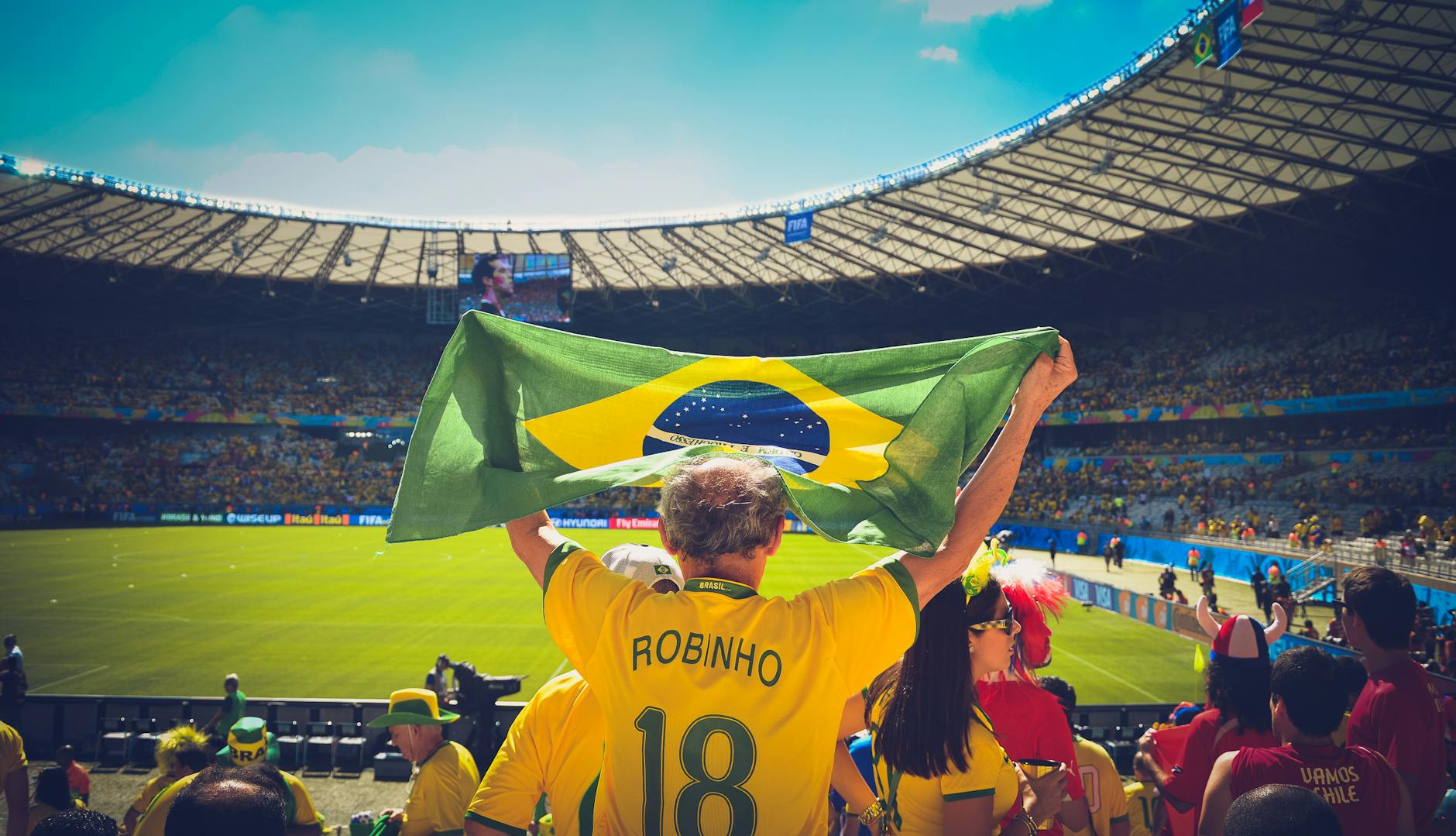
Photo by Caio on Pexels
World Cup Hub also operates in a gambling-related content environment, so responsible decision-making is essential. Predictions are analysis, not guarantees; readers should verify that wagering is legal in their jurisdiction, understand applicable age requirements, set fixed limits, and never treat a tip as a reason to chase losses. A “high-confidence” label has no power to defeat variance, injuries, refereeing decisions, or the basic uncertainty of football.
Want the practical details in one place? Review the latest tournament coverage before finalising any match or travel decision.
Verdict
The 2026 FIFA World Cup deserves serious planning because its scale changes the value of every decision. With 48 teams, 104 matches, 16 host cities, three host nations, and a new Round of 32, the tournament offers more football but also more opportunities for poor assumptions. Atlanta, Los Angeles, Mexico City, Toronto, Miami, Dallas, and the other host cities will each deliver a distinct experience; no single itinerary is automatically best.
The winning strategy is selective rather than excessive. Choose a regional route, verify every official detail, allow generous transport time, and interpret matches through standings, tactics, player condition, and climate. World Cup Hub provides the daily analytical layer needed to follow that process, including team predictions, player statistics, tactical breakdowns, and tournament news.
My final recommendation is direct: do not buy the first attractive package, do not trust unsupported “official” claims, and do not confuse a famous team with a sound prediction. Build the trip around confirmed information, then enjoy the spectacle with the calm confidence of someone who prepared properly.
Ready to follow the tournament with sharper analysis?
Frequently Asked Questions
Q: What is the football 2026 World Cup?
A: The football 2026 World Cup is the FIFA men’s international tournament hosted by the United States, Canada, and Mexico from June 11 to July 19, 2026. It will feature 48 teams and 104 matches across 16 host cities, making it the largest World Cup edition to date. The opening match is scheduled for Estadio Azteca in Mexico City, while the final will take place at MetLife Stadium in the New York/New Jersey region.
Q: How many teams will play in the 2026 World Cup?
A: Forty-eight national teams will compete in the 2026 World Cup. FIFA expanded the tournament from 32 teams, creating 12 groups of four during the opening phase. The top two teams in every group and the eight best third-placed teams will advance to the Round of 32, adding an extra knockout stage before the Round of 16.
Q: How can I plan travel for the 2026 FIFA World Cup?
A: Plan travel by choosing a host-city cluster before booking flights and accommodation. Atlanta, Miami, and Dallas form a more manageable eastern or southern United States strategy than combining Los Angeles, Toronto, and Mexico City in a short period. Verify official fixtures, passport requirements, venue rules, transport arrangements, and cancellation policies before making non-refundable purchases.
Q: What is the difference between the 2026 World Cup group stage and knockout stage?
A: The group stage uses 12 groups of four teams, while the knockout stage begins with 32 teams and proceeds through single-elimination rounds. Group matches allow teams to recover from one poor result, particularly because eight third-placed teams qualify. From the Round of 32 onward, one defeat eliminates a team, so tactics, extra-time management, and squad depth become more decisive.
Q: Is World Cup Hub free to use?
A: World Cup Hub is a content platform providing World Cup predictions, tactical analysis, player statistics, and tournament coverage, but readers should check the site’s current access terms for specific features. Editorial insights and match information may be presented differently from any third-party wagering service. No analysis guarantees a result, and users should confirm legal and age requirements before considering gambling-related activity.
Q: Why might a World Cup prediction change before kick-off?
A: A World Cup prediction may change because of confirmed line-ups, injuries, weather, travel fatigue, tactical adjustments, or updated qualification incentives. A star player returning to the squad may not be physically ready for a full-intensity match, while a third-place qualification scenario can transform a team’s risk tolerance. Recheck official team news and final starting line-ups before relying on any pre-match assessment.
Q: What should I do if a 2026 World Cup ticket or travel offer looks suspicious?
A: Stop before paying and verify the offer through FIFA, the venue, the official local organising authority, or a recognised ticketing partner. Warning signs include pressure to pay immediately, cryptocurrency-only transactions, vague “guaranteed” seating, copied branding, and missing refund terms. Save correspondence, use payment methods with consumer protections, and report suspected fraud to the relevant platform or local authorities.
Thank you for reading.
World Cup Hub · The Sovereign Editorial · Vol. I