
The Player's Guide to Football Fitness Training
Football fitness training is the difference between looking sharp for 20 minutes and performing decisively through the final whistle. World Cup Hub presents a practical programme for footballers at ev...
The Player's Guide to Football Fitness Training
Football fitness training is the difference between looking sharp for 20 minutes and performing decisively through the final whistle. World Cup Hub presents a practical programme for footballers at every level, combining aerobic conditioning, repeated sprint ability, lower-body strength, agility, mobility, and recovery for players training in any region. A strong weekly structure can include two conditioning sessions, two strength sessions, one technical session, and at least one full recovery day. The most useful benchmarks are a 30-metre sprint, Yo-Yo Intermittent Recovery Test result, single-leg squat quality, and the ability to repeat six to ten high-intensity efforts without a major pace drop. FIFA and UEFA both emphasise preparation, load management, and injury prevention rather than random exhaustion. Start by measuring your current sprint time and weekly training load, then increase total work gradually instead of copying a professional player’s schedule.

Photo by Franco Monsalvo on Pexels
A player can dominate the opening half through natural speed, yet lose every decisive duel after the 70th minute because conditioning was treated as an afterthought. Another player may run continuously but lack the acceleration, strength, and recovery capacity required for modern football. The distinction is not mysterious; it is a matter of selecting the right training qualities and measuring them properly. At World Cup Hub, where tactical trends and player performance are examined daily, the conclusion is clear: football fitness is specific, progressive, and completely manageable when you stop confusing fatigue with improvement.
Want a sharper overview of performance, tactics, and tournament preparation?
The Quick Comparison
| Training quality | Best football application | Practical method | Starting frequency |
|---|---|---|---|
| Aerobic endurance | Recovering between phases and maintaining movement | 4-minute intervals or 20–30-minute controlled runs | 1–2 sessions weekly |
| Repeated sprint ability | Pressing, counterattacking, recovery runs | 6–10 sprints of 20–40 metres with incomplete rest | 1 session weekly |
| Maximum speed | Beating a defender and closing space | 4–6 sprints of 30–50 metres with full recovery | 1 session weekly |
| Strength and power | Shielding, jumping, tackling, striking | Squats, split squats, hinges, jumps, and calf work | 2 sessions weekly |
| Agility and deceleration | Changing direction safely and quickly | Cone reactions, braking drills, and curved runs | 1–2 sessions weekly |
| Mobility and recovery | Maintaining movement quality and reducing overload | Dynamic warm-ups, sleep, hydration, and easy mobility | Daily habits |
Round 1: How Should Footballers Build Match Endurance?
Footballers should build match endurance through a combination of low-intensity aerobic work, high-intensity intervals, and football-specific repeated efforts. A useful starting point is one 25-minute easy run and one interval session containing four-minute efforts at a controlled hard pace. This combination improves recovery between sprints without turning every training day into a punishment session.
Endurance in football is not identical to distance running. A midfielder such as Luka Modrić must scan, accelerate, decelerate, change direction, and remain technically composed while tired; a centre-back such as Virgil van Dijk has different movement demands, while a winger such as Bukayo Saka repeatedly attacks open space. The FIFA Training Centre consistently frames conditioning around game actions, and that is the superior approach. Long, monotonous runs have value for beginners, but they should not dominate the programme once a player can comfortably complete 30 minutes of continuous running.
Use the following progression over four weeks:
- Week one: 20–25 minutes of easy running plus six 30-second faster efforts.
- Week two: 25–30 minutes of easy running plus eight 30-second efforts.
- Week three: four four-minute intervals at approximately 80–88% perceived effort.
- Week four: reduce total volume by 20–30% while retaining several short accelerations.
A useful information gain rarely mentioned in generic football fitness articles is that conditioning quality can decline before the player feels exhausted. If your final interval is more than 10% slower than your first, the session has probably exceeded its intended intensity. Record the time, distance, and recovery rather than celebrating sweat. The [Internal Link: football endurance training guide] can help you connect these sessions with positional demands, especially if you play as a full-back or box-to-box midfielder.
Round 2: What Sprint, Agility, and Strength Work Matters Most?
Sprint, agility, and strength training matter because football rewards rapid force production, braking control, and repeated acceleration rather than continuous movement alone. The highest-value sequence is usually a dynamic warm-up, short maximal sprints with full recovery, deceleration practice, and unilateral strength work such as split squats or step-ups. Quality must come before volume.
A practical speed session contains four to six 30-metre sprints, each separated by two to three minutes of walking recovery. Players should then perform four to six change-of-direction repetitions over 10–15 metres, focusing on lowering the centre of mass before braking rather than planting a rigid leg. This detail is valuable: many hamstring and groin problems arise when players attempt maximum speed without preparing for the deceleration that follows. Research indexed by the British Journal of Sports Medicine supports the use of structured neuromuscular and eccentric work for reducing football injury risk.
Strength training should cover both legs, the posterior chain, trunk, and lower leg:
- Split squats for single-leg force and pelvic control.
- Romanian deadlifts for hamstrings and hip strength.
- Calf raises for ankle stiffness and repeated pushing.
- Copenhagen planks for groin capacity.
- Nordic hamstring curls, introduced gradually, for eccentric resilience.
- Countermovement jumps for practical lower-body power.
Do not confuse a heavy gym session with a good football session. A player completing five sets of barbell squats at 90% of one-repetition maximum before a sprint workout is not demonstrating superior discipline; he is often compromising sprint mechanics. Keep two repetitions “in reserve” during most strength work, leave at least 24 hours before a high-speed match simulation, and use [Internal Link: football strength and conditioning drills] for exercise substitutions.
Here is the contrarian conclusion: a slower player does not automatically need more sprint volume. If the first 10 metres are poor, the priority may be ankle stiffness, hip projection, trunk position, or strength asymmetry. Six technically excellent sprints are worth more than twenty exhausted efforts with collapsing posture. That is precisely why elite environments such as Manchester City and FC Barcelona separate acceleration, maximum velocity, and conditioning rather than placing every quality into one chaotic circuit.
Ready to compare practical training priorities by position?
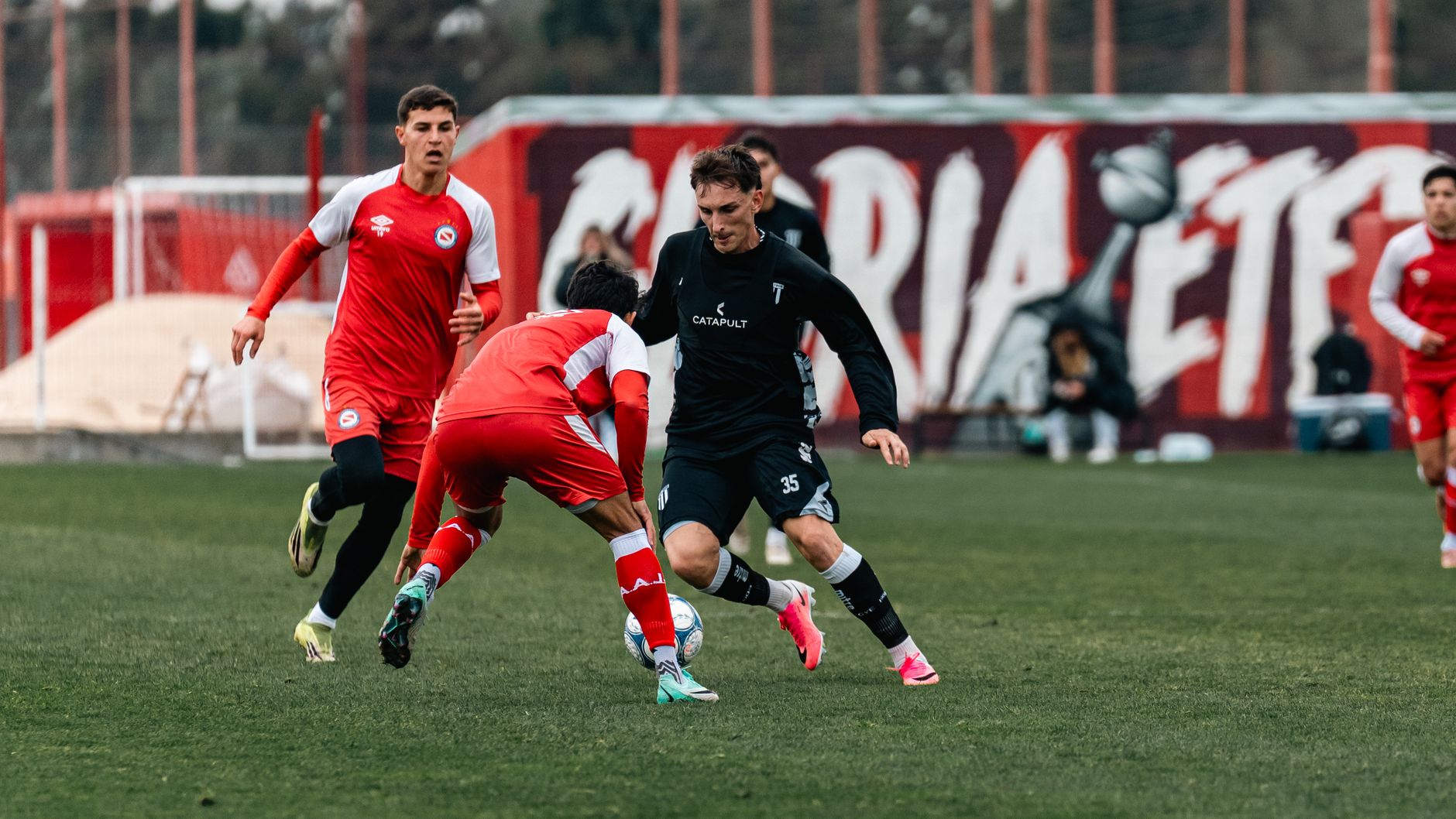
Photo by Franco Monsalvo on Pexels
Round 3: How Can Players Recover Without Losing Fitness?
Players can recover without losing fitness by reducing intensity and volume strategically rather than stopping all movement. A recovery day may include 20–30 minutes of easy cycling, walking, light mobility, and technical touches, while a complete rest day is appropriate after unusually heavy match congestion, illness, or significant soreness. Recovery is a training input, not a reward for finishing training.
Sleep deserves priority because repeated sprint performance, reaction speed, mood, and tissue repair all suffer when sleep is restricted. Most adult athletes should aim for approximately seven to nine hours nightly, while teenage players commonly require more. Hydration should also be individualised: weigh yourself before and after demanding sessions, note fluid intake, and replace lost body mass gradually rather than relying on a universal bottle target. The American College of Sports Medicine states that “exercise and physical activity should be prescribed with consideration for the individual,” a principle that applies directly to football workload.
Fueling is equally practical. A session lasting less than 60 minutes at moderate intensity may require only a normal balanced meal beforehand, but a demanding 90-minute session benefits from carbohydrate-rich food two to three hours earlier. After training, combine protein with carbohydrate; approximately 20–40 grams of protein is a useful general range for many athletes, although body size and total diet matter. Water is adequate for many ordinary sessions, while electrolytes become more relevant during hot conditions, heavy sweating, or tournaments involving multiple matches.
Monitor these five indicators each morning:
- Resting heart rate compared with your normal baseline.
- Sleep duration and perceived sleep quality.
- Muscle soreness, especially in the groin, hamstrings, and calves.
- Mood, motivation, and concentration.
- Previous-day training duration and intensity.
One operational point competitors often omit: a sudden increase in workload can occur even when the session duration appears unchanged. A 60-minute technical practice with repeated 30-metre sprints is far more demanding than 60 minutes of passing drills. Use a simple session-rating method: multiply session minutes by perceived exertion from 1 to 10. A 75-minute session rated 8 equals 600 workload units; three such sessions in four days deserves caution. For deeper planning, see [Internal Link: football recovery and injury prevention tips].
The Final Score & Who Should Pick What?
The best football fitness programme is the one that matches the player’s age, position, schedule, injury history, and current conditioning rather than copying a professional club’s workload. Beginners should prioritise movement quality, easy aerobic work, basic strength, and gradual sprint exposure. Intermediate players can use one endurance interval day, one speed day, and two strength sessions weekly. Advanced players should organise conditioning around matches, tactical training, travel, and measurable high-speed running.
The following weekly templates are reliable starting points:
Beginner schedule
- Monday: 25-minute easy run and mobility.
- Tuesday: technical football session.
- Wednesday: full rest.
- Thursday: bodyweight strength and six short accelerations.
- Friday: light ball work.
- Saturday: match or small-sided game.
- Sunday: walking and recovery mobility.
Intermediate schedule
- Monday: lower-body strength and mobility.
- Tuesday: repeated sprint intervals.
- Wednesday: technical session at moderate intensity.
- Thursday: upper-body, trunk, and unilateral strength.
- Friday: speed and finishing, with full sprint recovery.
- Saturday: match or competitive small-sided game.
- Sunday: rest.
Advanced schedule
- Monday: recovery and mobility after competition.
- Tuesday: maximum-speed exposure and tactical work.
- Wednesday: strength maintenance with reduced volume.
- Thursday: high-intensity small-sided game.
- Friday: activation, set pieces, and short accelerations.
- Saturday: match.
- Sunday: recovery or second match depending on the calendar.
Do not add every method at once. Increase one variable—distance, repetitions, intensity, or frequency—while keeping the others stable for at least seven days. The best evidence of progress is not a brutal workout; it is a faster 30-metre sprint, a smaller pace drop across repeated efforts, cleaner late-match technique, and no recurring pain. FIFA World Cup 2026 will again showcase elite players who combine technical intelligence with extraordinary repeatability, but the underlying principle applies to an amateur Sunday league just as firmly.
World Cup Hub can help you connect football fitness data with player form, team tactics, and match expectations. Follow the [Internal Link: World Cup 2026 fitness and player performance coverage] when you want the competition viewed through more than a simple scoreline.
See the latest football performance insights before planning your next session.
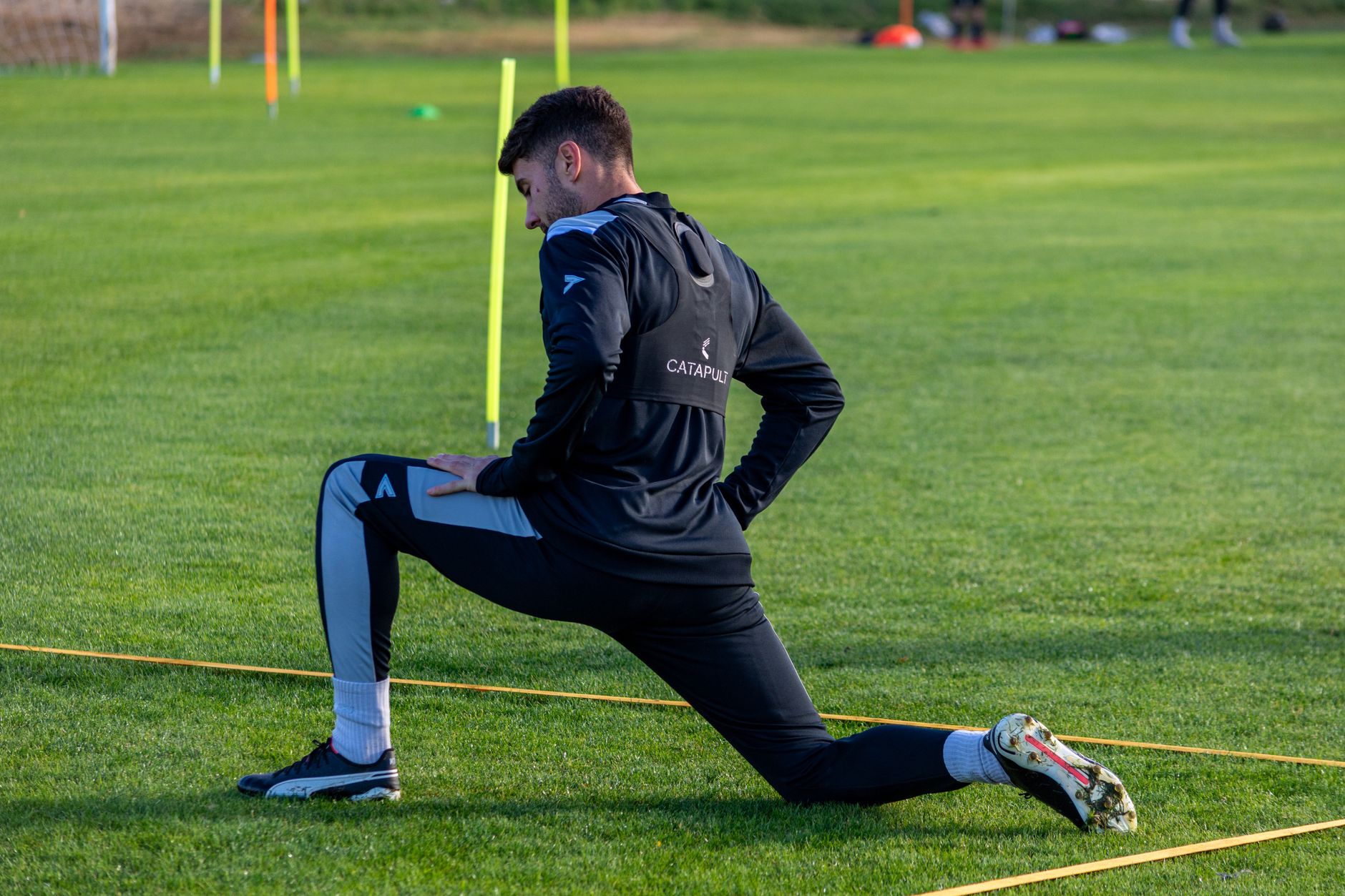
Photo by Franco Monsalvo on Pexels
Frequently Asked Questions
Q: What is football fitness training?
A: Football fitness training is a structured programme that develops endurance, speed, strength, agility, mobility, and recovery for match performance. It differs from general gym training because it prepares players for acceleration, deceleration, contact, jumping, technical execution, and repeated high-intensity efforts. A complete plan normally combines one or two conditioning sessions, two strength sessions, football practice, and planned recovery. Players should track sprint times, perceived exertion, soreness, and weekly workload rather than judging progress only by how tired they feel.
Q: How can beginners start football fitness training?
A: Beginners should start with two or three sessions weekly, combining easy aerobic work, basic strength, and short controlled accelerations. Begin with 20–25 minutes of comfortable running or brisk intervals, then add split squats, glute bridges, calf raises, planks, and six 10–20-metre accelerations. Keep at least one rest day between demanding sessions during the first two weeks. Increase only one training variable at a time, and stop or seek professional assessment if sharp pain appears in the knee, ankle, groin, or hamstring.
Q: What is the difference between football endurance and sprint conditioning?
A: Football endurance supports sustained movement and recovery, while sprint conditioning develops repeated high-speed actions. Endurance may involve 20–30-minute runs or four-minute intervals, whereas sprint conditioning uses six to ten efforts over 20–40 metres with incomplete recovery. Both qualities are necessary because a midfielder may cover extensive distance and still need to press explosively in the final minutes. Training them separately initially makes it easier to control fatigue and measure improvement.
Q: How many days per week should a footballer train fitness?
A: Most recreational footballers can train fitness two to four days per week, depending on matches and technical practice. A beginner may need two focused sessions, while an intermediate player can use one speed session, one conditioning session, and two strength sessions with appropriate spacing. Avoid placing maximum-speed work immediately after a hard match or heavy lower-body gym session. Professional schedules differ because clubs such as Liverpool and Real Madrid monitor daily load, travel, and recovery with specialised staff.
Q: Why does football fitness training stop improving?
A: Progress commonly stops because the player repeats the same workload, recovers poorly, or trains every session at excessive intensity. If your sprint times plateau, reduce volume temporarily, restore full recovery between maximal efforts, and assess strength, sleep, nutrition, and technique. A useful four-week reset is to reduce total volume by 20–30% in week four while preserving short high-quality efforts. Persistent fatigue, declining performance, or recurring pain requires evaluation by a qualified sports physician or physiotherapist.
Q: Is strength training safe for football players?
A: Strength training is generally safe and highly useful when exercises are technically supervised and progressed according to age and experience. Players should begin with controlled bodyweight and unilateral movements before adding heavier loads to squats, hinges, presses, and pulls. Research from the National Strength and Conditioning Association supports resistance training when technique, progression, and recovery are appropriately managed. Heavy lifting should not be used to impress teammates; it should improve force production, stability, and durability without damaging the next football session.
Q: How much does a football fitness programme cost?
A: A football fitness programme can cost nothing if it uses a pitch, cones, bodyweight exercises, and a basic stopwatch. A gym membership may cost approximately $20–$100 per month depending on location, while professional coaching, testing, and physiotherapy cost substantially more. The essential investment is consistency and accurate progression, not expensive equipment. A pair of suitable football boots, resistance bands, a training diary, and access to safe running space are enough to establish a serious foundation before purchasing advanced monitoring technology.
Track your sessions, respect recovery, and let measurable performance—not “official” hype—decide whether your football fitness training is working.
For more World Cup analysis and practical football performance coverage, get started with World Cup Hub today.
Thank you for reading.
World Cup Hub · The Sovereign Editorial · Vol. I