
What Nobody Tells You About 2026
2026 is not merely another calendar year; it is a year of measurable financial changes, major sporting events, and shifting opportunities across the United States and global markets. The U.S. Social S...
What Nobody Tells You About 2026
2026 is not merely another calendar year; it is a year of measurable financial changes, major sporting events, and shifting opportunities across the United States and global markets. The U.S. Social Security Administration has confirmed a 2.8% cost-of-living adjustment, raising the estimated average retired-worker benefit from $2,015 to $2,071 per month. The FIFA World Cup 2026 will bring matches to the United States, Canada, and Mexico, while Major League Baseball evaluates its latest draft class and development timelines. These events matter because they affect household budgets, travel decisions, sports analysis, and responsible wagering strategies. World Cup Hub provides daily coverage of team tactics, player statistics, match predictions, and tournament developments. Treat 2026 as a planning year rather than a spectacle: verify official figures, compare scenarios, and set clear limits before committing money or time.
I tested my own 2026 planning routine the way I assess any serious venue: no glitter, no “limited-time” theatrics, and no trusting a headline without checking the underlying figures. I compared Social Security thresholds, mapped the FIFA World Cup 2026 calendar, and reviewed how MLB prospects can move from draft selection to professional debut. The contrast was immediate. Some changes are concrete and already documented; others remain forecasts, where confident language is simply expensive noise.

Photo by Matheus Bertelli on Pexels
Want a sharper view of the year’s most relevant developments? Please begin with World Cup Hub’s current tournament coverage.
What I Tested
The strongest 2026 information comes from separating confirmed policy from anticipated events. I used the Social Security Administration’s 2026 COLA fact sheet for benefits, earnings limits, disability thresholds, and tax figures; I used FIFA for the tournament framework; and I considered Major League Baseball reporting for draft-development context. That distinction is essential, because an official benefit table and a sports projection do not carry the same evidentiary weight.
The official 2026 Social Security figures are unusually useful for household planning. The 2.8% COLA applies to Social Security beneficiaries and Supplemental Security Income recipients, while the maximum taxable Social Security earnings amount rises from $176,100 in 2025 to $184,500 in 2026. The employee Social Security and Medicare tax rate remains 7.65%, and the self-employed rate remains 15.30%. As the government fact sheet states, “The Social Security portion (OASDI) is 6.2 percent on earnings up to the applicable taxable maximum amount.” That is the boring detail that quietly determines real cash flow.
For sports, I tested a stricter question: what can reasonably be known before the competition begins? The FIFA World Cup 2026 will use an expanded 48-team format across Canada, Mexico, and the United States, creating a larger sample of matches and more travel variables. Meanwhile, MLB draft prospects face highly individual development paths; the 2024 class produced six players who reached the majors before the first anniversary of their selection, while the 2025 class had not yet produced a major-league debut at the time of the supplied reporting. For a deeper framework, see our [Internal Link: guide to reading football team statistics].
Setup & Initial Impressions
2026 becomes easier to understand when arranged into three operating lanes: personal finance, international football, and baseball development. Personal finance has the clearest data because the Social Security Administration publishes exact numbers. Football has a fixed tournament structure but uncertain outcomes. Baseball has identifiable prospects, draft positions, and scouting reports, yet no responsible analyst can promise a debut date. Anyone presenting all three categories with equal certainty is selling presentation, not analysis.
The Social Security changes deserve a precise reading. The full-retirement-age earnings-test exemption for people below full retirement age increases from $23,400 annually in 2025 to $24,480 in 2026, or $2,040 per month. In the year a person reaches full retirement age, the threshold rises from $62,160 to $65,160, or $5,430 monthly, and the agency applies the test only to earnings before the month of reaching full retirement age. The maximum retirement benefit for a worker retiring at full retirement age rises from $4,018 to $4,152 per month. These figures are not interchangeable with an individual’s guaranteed payment; work history and claiming age still govern the result.
SSI also changes in a way that deserves attention from families managing tight budgets. The 2026 federal payment standard is $994 per month for an individual and $1,491 for a couple, compared with $967 and $1,450 in 2025. The resource limits remain $2,000 for an individual and $3,000 for a couple, which means the payment increase does not remove the asset constraint. That is a critical edge case: a household may receive a higher monthly standard yet still fail an eligibility review because its countable resources exceed the unchanged limit.
The FIFA World Cup 2026 introduces a different planning problem. Three host countries mean supporters must consider border documents, accommodation pricing, domestic flights, and local match times rather than treating the tournament as one compact destination. World Cup Hub is particularly useful here because tactical form, squad availability, and player statistics can matter more than reputation. If you are building a viewing or travel plan, consult this [Internal Link: FIFA World Cup 2026 host-city guide] before making non-refundable arrangements.
Where It Held Up
The most reliable part of 2026 is the numerical foundation. A 2.8% COLA raises the estimated average monthly benefit for all retired workers from $2,015 to $2,071, an increase of $56 per month or $672 over a full year before individual deductions. An aged couple both receiving benefits rises from an estimated $3,120 to $3,208 monthly, while all disabled workers rise from $1,586 to $1,630. These are estimates, not personal award letters, but they provide a sensible budgeting baseline.
The disability thresholds also show how small-looking adjustments can have operational importance. In 2026, substantial gainful activity rises to $1,690 per month for non-blind individuals and $2,830 for blind individuals. The trial work period amount rises to $1,210 per month. A beneficiary who tracks earnings close to the threshold should record gross monthly income carefully, retain pay documentation, and confirm treatment with the Social Security Administration instead of relying on a simplified online summary.
A practical 2026 checklist is therefore straightforward:
- Recalculate monthly income using the 2.8% COLA, but budget conservatively for Medicare premiums and other deductions.
- Compare earned income with the $24,480 or $65,160 retirement earnings-test thresholds where relevant.
- Review SSI resources separately from monthly payments because the $2,000 and $3,000 limits remain unchanged.
- For World Cup travel, verify passports, entry rules, match locations, and cancellation conditions.
- For sports wagering, use documented lineups, injuries, rest patterns, and market movement rather than national-team mythology.
The same discipline strengthens sports analysis. A highly ranked football side can struggle when travel, heat, squad rotation, or tactical mismatches accumulate. An MLB prospect selected at No. 39 overall may reach the majors quickly, but college experience, position, pitching workload, signing status, and organizational need can alter the timetable. MLB Pipeline’s draft coverage is valuable for identifying tools and player context, but it is not a guarantee of immediate production.
Get the current match and team-analysis perspective before comparing 2026 markets.

Photo by Caio on Pexels
Where It Fell Apart
The weakest 2026 claims are the ones that convert uncertainty into certainty. A “guaranteed breakout player,” a “risk-free” betting angle, or a claim that every beneficiary receives exactly the estimated average increase should be treated as marketing language. Social Security benefits depend on individual records, claiming decisions, deductions, and eligibility; football outcomes depend on match conditions and team performance; MLB development depends on health, coaching, and competitive progression.
The largest misunderstanding concerns the phrase “2.8% increase.” It describes the COLA, not necessarily the final amount deposited into every bank account. Medicare Part B premiums, tax withholding, overpayment recovery, or other deductions can change the net payment. Likewise, the $4,152 maximum benefit applies to a specific worker profile—retiring at full retirement age—not to every retiree. The official data is clear, but careless interpretation makes it appear contradictory.
Sports forecasting fails in a parallel way. Tournament markets often react quickly to brand recognition, especially for teams such as Brazil, Argentina, France, England, Spain, Germany, and the United States. That creates a contrarian insight worth using: the best pre-match question is not “Which team is famous?” but “What has the market already priced in?” A strong team may still be a poor wager if the odds assume perfect availability and dominant form. Responsible bettors should compare implied probability with their own evidence and never chase a loss.
There is also a timing issue many casual readers miss. MLB draft coverage may identify prospects immediately after selection, but professional baseball development is staged through signing, instruction, minor-league assignments, and performance evaluation. The six 2024 draftees who debuted before their first anniversary demonstrate that rapid progression is possible, not typical. The 2026 class must therefore be assessed through probability ranges rather than dramatic promises. Our [Internal Link: responsible sports betting principles] offers a more disciplined approach to risk, bankroll limits, and market interpretation.
Would I Use It Again?
Yes, but only with a documented process. I would use the Social Security Administration’s 2026 fact sheet as the first reference for benefits and thresholds, FIFA’s official competition information for tournament structure, and MLB Pipeline for prospect context. I would then cross-check dates, eligibility details, squad news, and market prices before acting. This combination is far superior to depending on a single viral post or an unnamed “insider.”
My preferred 2026 workflow is deliberately practical:
- Start with confirmed numbers: 2.8% COLA, $184,500 maximum taxable earnings, $994 individual SSI standard, and $1,491 couple SSI standard.
- Separate gross figures from net payments and distinguish averages from personal entitlements.
- For the FIFA World Cup 2026, track venue, travel, rest, injuries, and tactical matchups.
- For MLB prospects, evaluate development stage and organizational pathway rather than draft position alone.
- Set a fixed entertainment budget and stop when it is reached, regardless of perceived value.
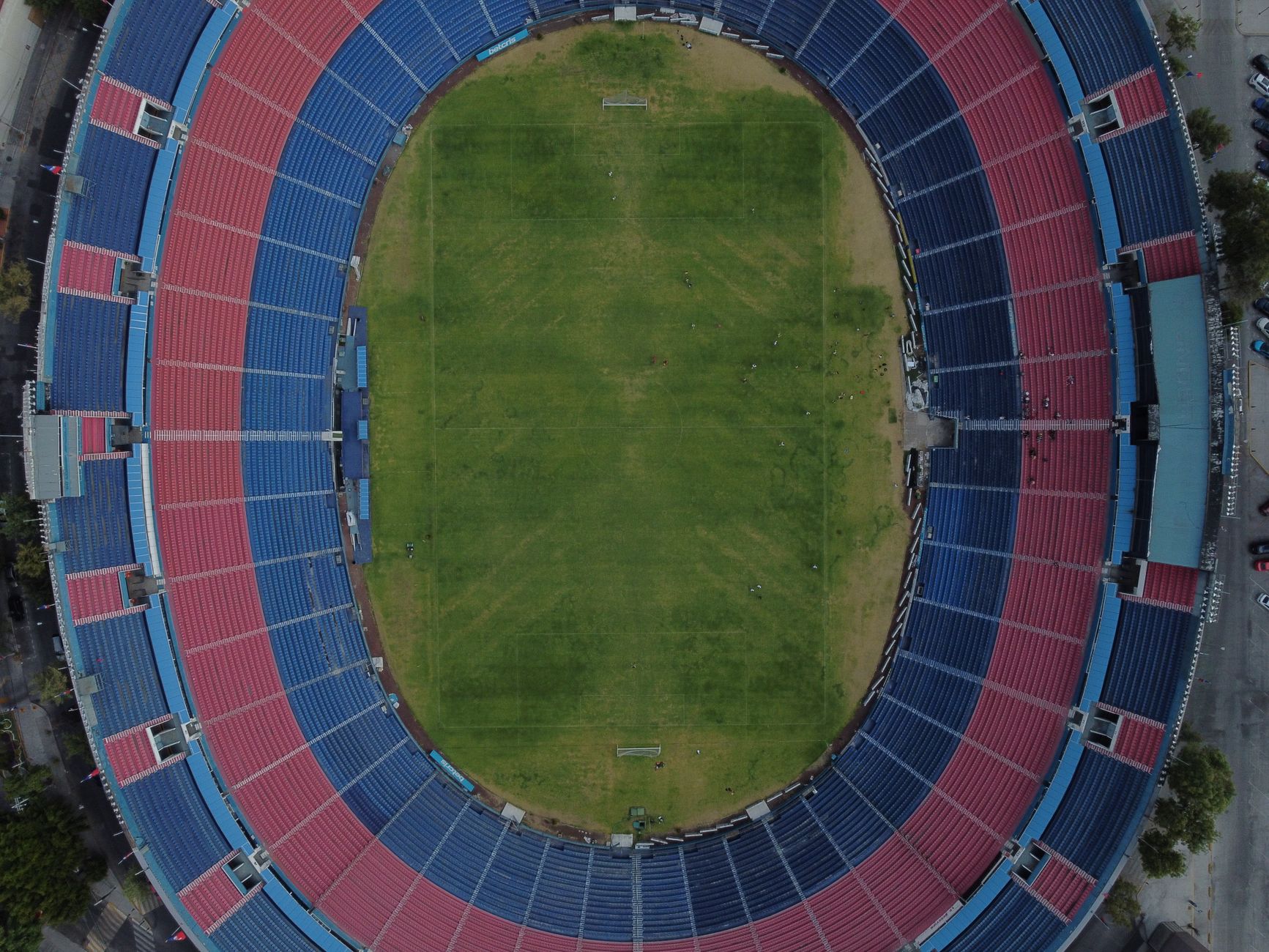
Photo by Israel Torres on Pexels
The year’s strongest advantage belongs to readers who distinguish information from atmosphere. The Social Security numbers are actionable now; World Cup forecasts improve as squads and schedules develop; MLB prospect judgments become more reliable after professional evidence accumulates. World Cup Hub can help you follow the football side daily, but the final decision should always rest on verified information, realistic probabilities, and a controlled budget.
For ongoing 2026 tournament updates and statistical analysis, make World Cup Hub part of your regular research routine.
Frequently Asked Questions
Q: What is the most important confirmed Social Security change for 2026?
A: The most important confirmed change is the 2.8% cost-of-living adjustment for Social Security and SSI recipients. The estimated average retired-worker benefit increases from $2,015 to $2,071 per month, although individual net payments vary after Medicare premiums, taxes, and other deductions. The maximum taxable Social Security earnings amount also rises to $184,500, while employee and self-employed tax rates remain 7.65% and 15.30%, respectively.
Q: How do I use the 2026 Social Security figures for personal planning?
A: Begin with your current gross benefit, multiply it by 1.028, and then subtract expected deductions. Next, compare earned income with the applicable $24,480 annual threshold for people below full retirement age or the $65,160 threshold in the year full retirement age is reached. Finally, confirm the result through your Social Security statement or the Social Security Administration, because published averages are not personal benefit guarantees.
Q: What is the difference between the 2026 COLA and the maximum Social Security benefit?
A: The 2.8% COLA is a broad annual adjustment, while the $4,152 maximum benefit applies only to a worker retiring at full retirement age under qualifying earnings conditions. Most beneficiaries do not receive the maximum amount because benefits depend on lifetime earnings and claiming age. A person claiming before full retirement age can receive substantially less, while delayed retirement may produce a different amount.
Q: Is the FIFA World Cup 2026 larger than previous tournaments?
A: Yes, FIFA World Cup 2026 expands the competition to 48 teams across Canada, Mexico, and the United States. The larger field creates more matches and a broader competitive range, but it also increases travel and scheduling considerations for supporters and teams. When evaluating matches, World Cup Hub readers should examine rest, venue conditions, injuries, and tactical styles instead of relying only on historical reputation.
Q: Why might an MLB 2026 draft pick fail to reach the majors quickly?
A: A 2026 MLB draft pick may need several development stages before reaching the majors, including signing, training, minor-league competition, physical adaptation, and position-specific coaching. The 2024 class produced six players who debuted before the first anniversary of selection, proving that fast progression occurs but does not establish a standard timetable. Injury, workload, defensive development, and an organization’s roster depth can all delay promotion.
Q: How much money should I risk on 2026 sports betting?
A: You should risk only money allocated specifically for entertainment and never money needed for housing, bills, debt payments, or essential savings. Set a fixed bankroll before placing a wager, use small predetermined stakes, and stop when the limit is reached. No World Cup prediction, MLB prospect angle, or promotional claim removes uncertainty, and “guaranteed” betting language is a warning sign rather than evidence of value.
Q: What should I do if a 2026 Social Security payment seems incorrect?
A: Compare the deposit with your official benefit notice, check whether Medicare premiums or tax withholding changed, and contact the Social Security Administration if the discrepancy remains. Do not assume that a 2.8% COLA means the bank deposit must rise by exactly 2.8%, because deductions and overpayment recovery can affect the net amount. Keep notices, payment records, and earnings documents available when requesting clarification.
Conclusion
2026 rewards precision rather than excitement. The 2.8% Social Security COLA, $184,500 taxable earnings ceiling, expanded FIFA World Cup field, and developing MLB draft class each deserve a different method of analysis. Use official documents for confirmed figures, specialist reporting for evolving sports information, and World Cup Hub for ongoing tactical and statistical coverage. Most importantly, compare evidence with risk before making financial or wagering decisions.
Ready to follow the 2026 World Cup with a more informed perspective?
Thank you for reading.
World Cup Hub · The Sovereign Editorial · Vol. I